The Professor's Notes

Where my thoughts and your eyes (and now ears!) collide

Archive for January, 2012

Private Rights vs Public Good–who should win?

Posted by Steve Brady On January - 29 - 2012ADD COMMENTS

Update:  The Citizen, Bobby Maguire, was given permission to use a 33′ right of way.  In exchange for his use (not ownership) of 1/2 an acre of land, he has voluntarily given to the state 1 full acre, and $15,000.  More than fair, I would say.

I enjoy, no LOVE, my place at Rose Valley Lake in PA. Perhaps you have seen some of my photographs that I have posted here ocassionally, or visited my  sets on Flickr (around Rose Valley Lake and  creeks and rivers)  The beauty remains despite reasonable and rational development.

I love it so much that I am, In fact, disappointed every time I have to leave here to return to “Civilization.” That said, I also understand that private citizens have a right to use their private property in ways that they see fit, so long as the proposed uses are in line with the general guidelines and zoning of the area.

The “Friends of Rose Valley Lake” are stepping beyond the bounds of good citizens, as they are now seeking to block an individual from using his property in accordance with the zoning laws of the area. They are asserting that by granting this man access to his property (through the State fish commission property) he will somehow be violating the law.

They write on their homepage that:

” The ‘intent’ for Rose Valley Lake, was to ‘prevent developments . . . and retain the area in generally primitive conditions,’”

They then are somehow complaining that this citizen is willing to “trade with the PFBC one acre of land (generally inaccessible to the public) and $15,000 in exchange for an expanded farm lane right-of-way through Rose Valley Lake.”

Apparently the fact that he isn’t asking for a flat trade of one acre for another, but rather giving the state the land, AND $15,000, isn’t sufficient. Also, apparently the statement that the one acre of land is “generally inaccessible to the public” is meant to imply that is somehow a negative. Interesting in that many believe that in order to meet the objective of maintaining land in “generally primitive conditions” we should keep people from going there. (Remember, the biggest enemy of National Parks tends to be visitors to those same parks….)

One final comment from them. They are argue that the proposed trade would be for an “expanded farm lane right-of-way through Rose Valley Lake public lands in order to facilitate private development.”

Note this citizen isn’t proposing to DEVELOP public lands. He is simply seeking access to his privately owned property, so that he can exercise his legal right to develop his property as he sees fit, in accordance with the local zoning ordinances.

I ask–who are the unreasonable ones?

Also, they are requesting people sign their petition, but there exists no comparable avenue to elicit support for the land owner.  I have created a form, and would appreciate your taking the time to respond.  And for the record, I am interested in learning about BOTH sides of this.

Digital Textbooks the Apple Way–the “right” way?

Posted by Steve Brady On January - 24 - 2012ADD COMMENTS

I have many thoughts on digital textbooks, and you have all had an opportunity to read them here.   Apple has made their “big move” and I am both pleased to see digital moving forward, and also a bit concerned about what could become the “only” platform on campuses.

I actually presented a paper on the challenges of digital textbook pricing at the Western DSI (Decision Sciences Institute) conference in 2011.   You can read the paper here.  In that paper, I point out that by driving the logistics costs of moving, handling, and returning paper products out of the system, along with other costs such as maintaining a bookstore, one can drive the costs down to about (surprise!) $15.00 while maintaining the 2 year profits of the publisher. And by withdrawing the pressures of the resale market, the profits only go up from there.

First thoughts that led to that paper were written about here  and here.

Most recently I wrote about  consumer driven markets. Who should make the  choice? Digital textbooks are able separate the content from the medium, and allow flexibility–unless we are locked into a hardware platform.  I also wrote about this in this post.

I would welcome other thoughts on those posts and on the paper.

PlayPlay

Audio Books–do you listen? or “Can you hear me now?”

Posted by Steve Brady On January - 24 - 2012ADD COMMENTS

A recent annoucement caught my eye.  Mashable ran a story highlighting a new company, audiobooks.com, that will be following the “subscription” model that music has been using: making their full library available for a monthly fee.  This is in contrast to the model that audible.com uses (Leo LaPorte’s often hawked preference) in which you buy monthly credits, that can be applied for books that you will then own in perpetuity (but the credits expire after 6 months if not used.)

from the article:

For $24.95 a month, the service will give users unlimited access to its library of 11,000 audio books through its website and an HTML5 mobile app.

Though Amazon-owned competitor Audible has a monthly membership, it relies on a credit system that give users access to a certain number of books per month depending on the fee. Audiobooks is the first service we can find that is streaming books using a monthly model.

I am intrigued–and I started to wonder how many people actually listen.  Please take the time to fill out my survey, I would love to know what your preferences are!


(and, don’t forget to listen to our version of audiobooks–the Real Tech for Real People podcast!  Go visit http://rtfrp.com and get the latest episode!)

Get your Kindle Notes and Highlights even in the App!

Posted by Steve Brady On January - 13 - 2012ADD COMMENTS

Anyone reading my blog for any period of time knows that I love the Kindle’s highlight and notes features.  I wrote a macro for the original Kindles (that works on the Kindle 2 as well) to take the text file and make it a very nice readable document in Word.

One drawback had been that Amazon never explained how to get to the highlighted texts or notes when you were using a Kindle app–whether iPhone or Android.

Luckily others have deciphered this for us, and have developed a program that will generate a text file from the data file.  (The information in the apps is stored in *.mbp files, because they, like the core Kindle format, are based on the MobiBook standard.) Read the rest of this entry »

Amongst all the anger, hurt, and raw emotions surrounding the Jerry Sandusky and the toppling of the Penn State Leadership (including the forced removal of Joe Paterno), the “new” Administration came forward with a few promises.  You would expect a few of the promises. Integrity.  Honesty. And then… Transparency.  59 days later the new Coach was announced and the outrage and cries of treachery began–”So much for Transparency” OnwardState.com had as their headline.

The first two were aimed to address the issues at the heart of the charges being levied against Penn State in the scandal–that there was a cover-up, and that leaders of Penn State perjured themselves–lying in court rather than allegedly tell of the evils revealed to them.  The last one? Transparency?  Where did that one come from? Read the rest of this entry »

what is transparency?

Posted by Steve Brady On January - 9 - 2012ADD COMMENTS

Transparency has been in the news not only with the occupy movement, but also with penn state following the big scandal.  But what is transparency?
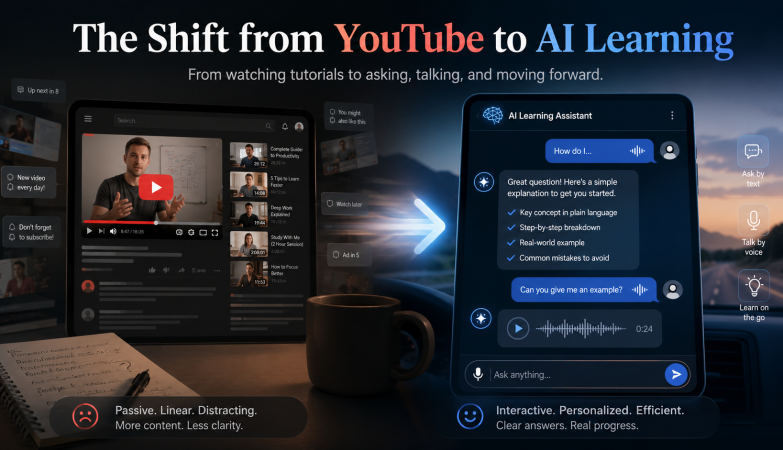
Does transparency mean that you tell everyone everything you do and why do it?  bust you violate all levels of confidentiality?

It seems to me when people an organization promise transparency, they are acknowledging a problem and suggesting they can no longer continue doing things the way they have always been done.  I realize this is not always the case, in that sometimes we’re just promising to foster an environment of trust, but that trust is based on the concept of sharing information.

reach leads me to ask these questions is the reality of organizations promising transparency while then defending your actions as being consistent with how things have always been done. If things have always been done this way how is that being more transparent?  Or to put it another way, if you have always been transparent why promise transparency as if it is something new?

I welcome your thoughts on these questions.

Featured Posts from the Archives

VIDEO

TAG CLOUD

  • Atom
  • About Me

    Many have asked, so let me tell you: I am a professor. BA, Political Science MPA (Master’s of Public Administration) MS Logistics Management PhD Business Administration (Business Logistics, supporting field Industrial Engineering) I have a strong professional interest in Collaborative Supply Chain Management, RFID in the Supply Chain (EPC), and Research Methods. I have a strong personal interest in political issues, and military affairs having retired from the US Air Force after 20 years.

    Twitter

      Photos

      Activate the Flickrss plugin to see the image thumbnails!