Yesterday I wrote a post on facebook (and shared a post from here) where I encourage us to return to politeness, while still having differences. After posting that, I was thinking about another one of my posts here on the blog.
I wrote a long time ago (circa 2010) about why “liberalism” doesn’t scale. Now to be clear, I am working off a “personal” definition of liberalism: “Liberalism is the moral obligation to care for other people—particularly those in genuine need—and to translate compassion into practical assistance. It works best when exercised personally, voluntarily, relationally, and locally, where people can understand the need, see the results, and remain connected to those they are helping.”
This is in contrast to the more traditional definition: “Liberalism is a political philosophy holding that individuals possess rights and liberties that government must respect, and that political power is legitimate only when it is limited, justified, and based upon consent.”
(BY THE WAY: Note that the traditional political definition more accurately fits what we call “conservatives” today.)
My definition, and my post, really is an explication on the concept of wanting similar outcomes, but disagreeing on process–and that nationalizing programs just “doesn’t work.”
—————
There really are two key points here though, and I think they are at times forgotten.
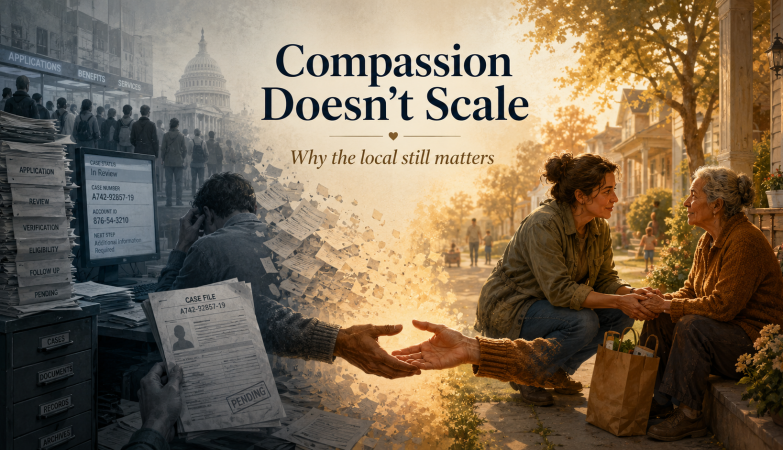
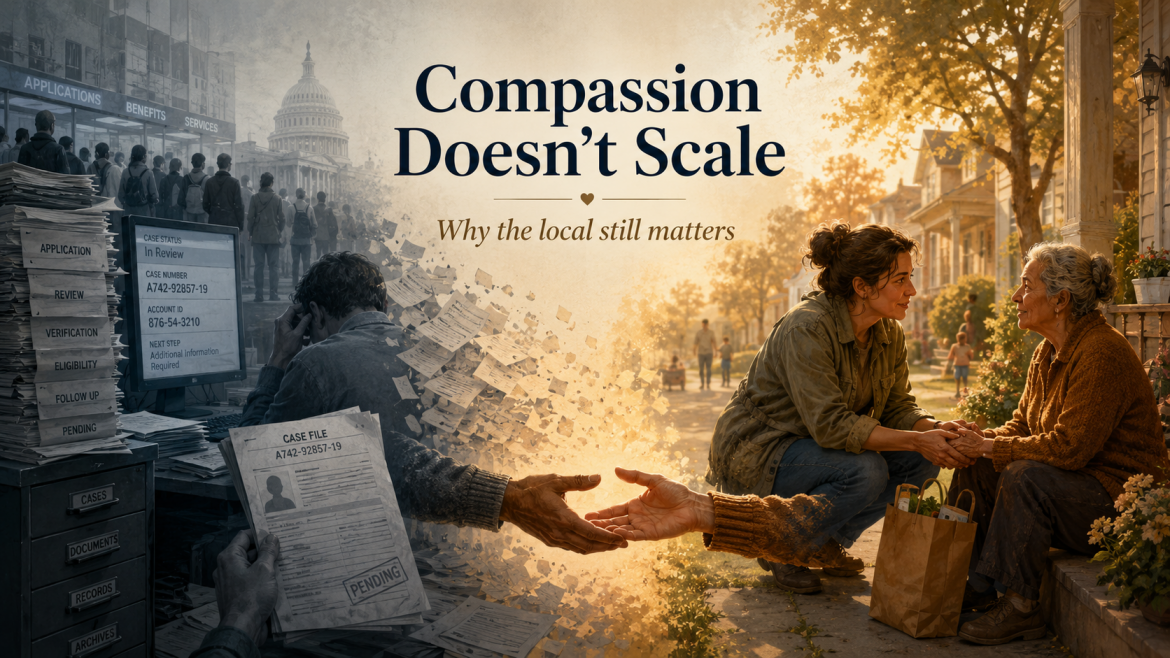
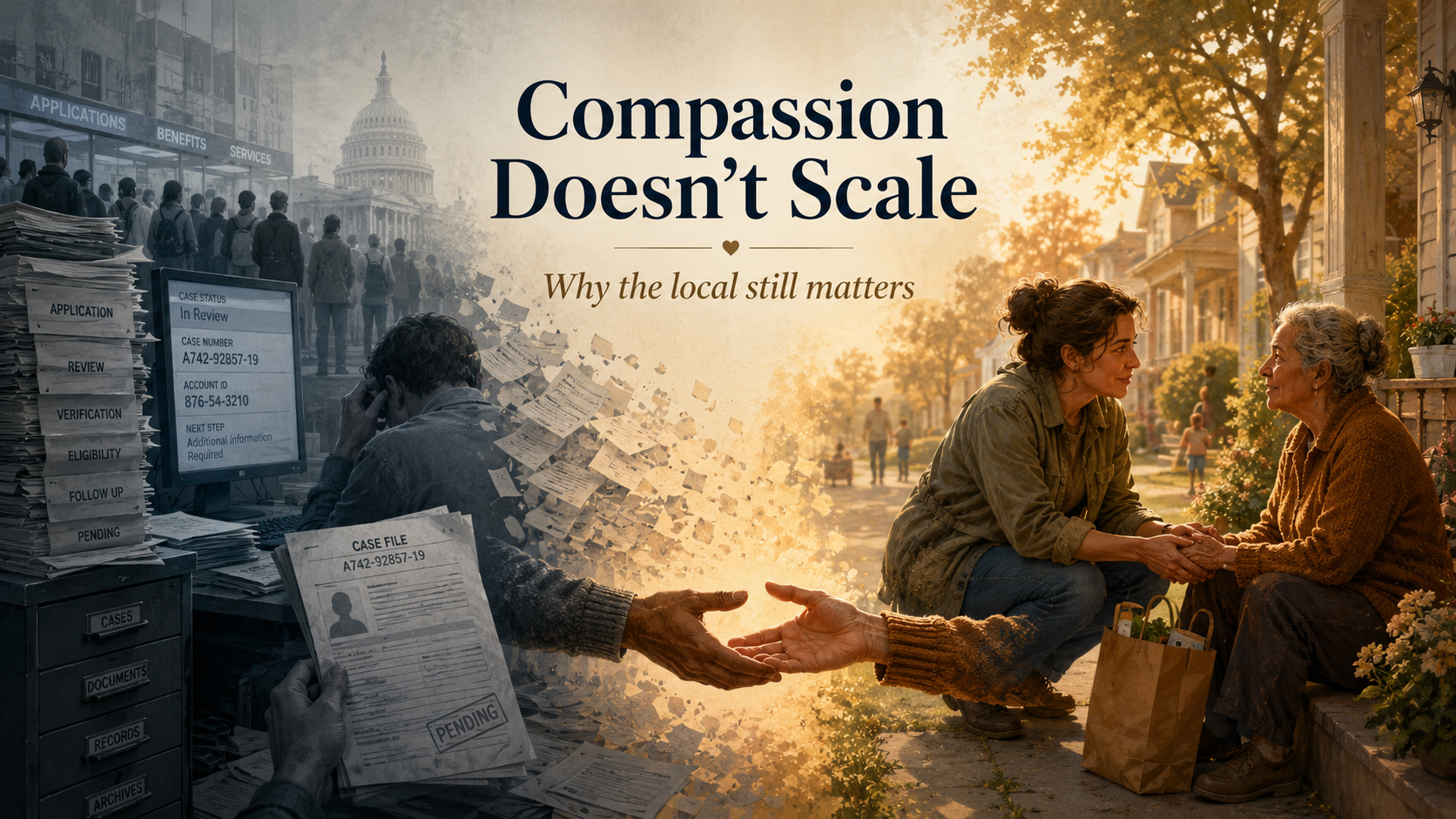
First, we cannot have a “heart for our neighbors” when they are turned into a number in a national system. We cannot care for someone when we only see a form, an application, or a complaint.
I had a call yesterday with a creditor while trying to negotiate a settlement for an organization, and he shared that “most people when they call just want one thing–to not have to pay anything.” He was shocked that I kept talking about reasonable arrangements–and that the organization wants to pay. That shocked him.

He wasn’t ready for that.
Why?
Because most calls are just “accounts.” They don’t want to work with them, and most importantly, they don’t share their story. They are simply “customer numbers.”
We want to care for others. We want “good outcomes.” But when bureaucracy is created heart is removed.
————–
Second, we need to never lose sight of the local.
It is often tempting to insist that “a program be created.” (Removing personal responsibility and connection.)
We then complain when “they” do things we don’t like. Especially when “they” are getting all “my” money. (hey, this isn’t just a race thing. Ever get upset at corporate subsidies? Local companies getting tax breaks? Same concept.)

We need to remember that LOCAL is what connects us. That LOCAL is where we need to show our compassion, our heart, and our generosity.
————-
So this is call for just that. Be generous to those around you in need. I don’t simply mean to your family. Or your closest friends. Real neighbors, in real need.
“The King will reply, ‘Truly I tell you, whatever you did for one of the least of these brothers and sisters of mine, you did for me.’ Matthew 25:40